Pre-launch. English edition in final proofing. Request the launch link and you get it before the public listing.

Sourcing Guidebook

The Dehua White Porcelain Sourcing Handbook

Everything a small overseas buyer needs to quote, sample, inspect and ship custom white porcelain from Dehua — written on the ground, in plain English, with the forms already made.

56 pages7 parts16 formsEnglish edition

$39.99 one-time · PDF, A4 print-ready · all sales final

Dehua · Sourcing Series

The Dehua White Porcelain Sourcing Handbook

Seven parts · sixteen forms
English edition · PDF

$39.99

Finished matte-glaze white porcelain pieces

The three things buyers lose money on

Who owns the mould you paid for

A paid mould is not automatically yours. The handbook separates the master model from the plaster working mould, and gives you the clause to sign before the mould fee leaves your account.

What is missing from the quotation

Local quotations usually arrive as one bundled number. The handbook gives you the breakdown order and the four extras that reappear on almost every quote in this county.

Part 2.5 is free below

Who decides what counts as a defect

Without a written grading standard, "handmade, small defects are normal" answers every complaint. A / B / C grading and the sampling rules settle it before the deposit.
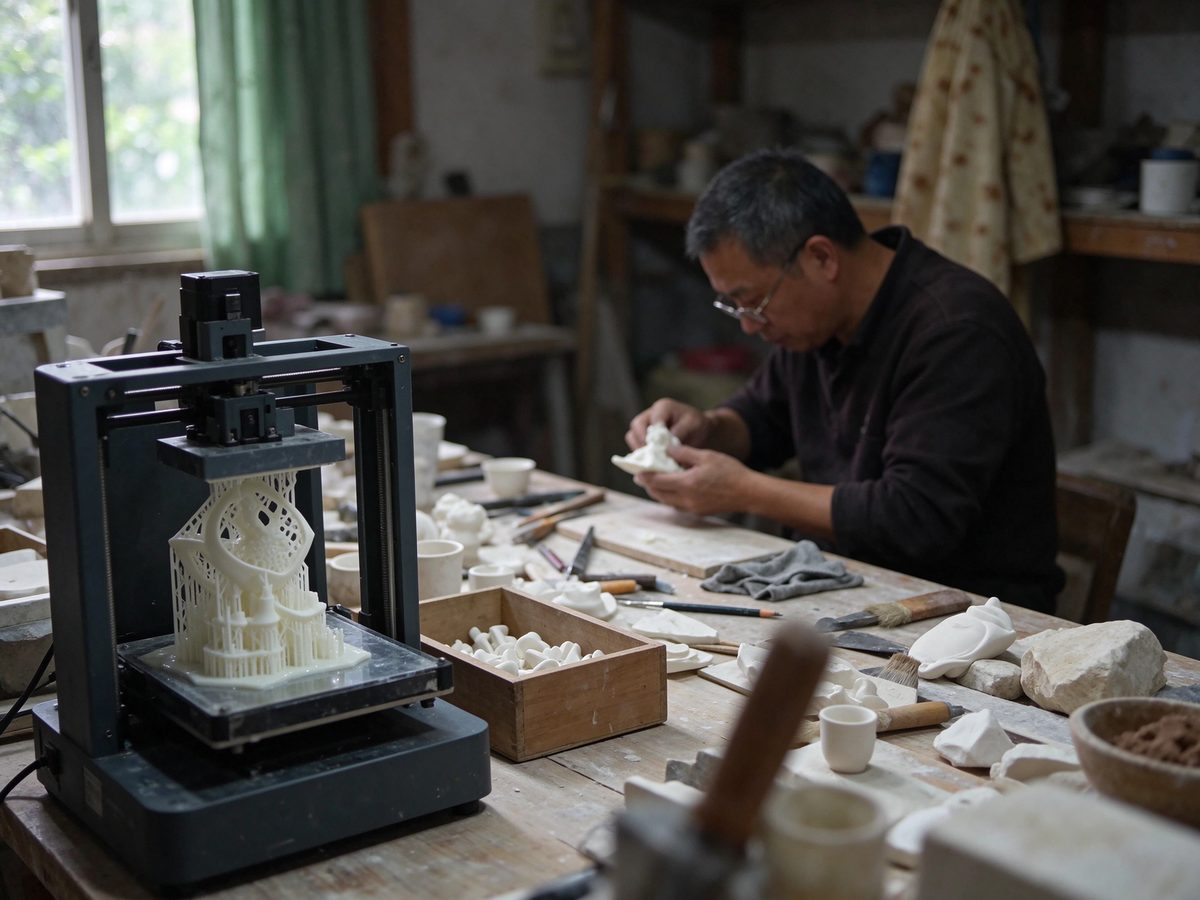
Master model
Master model
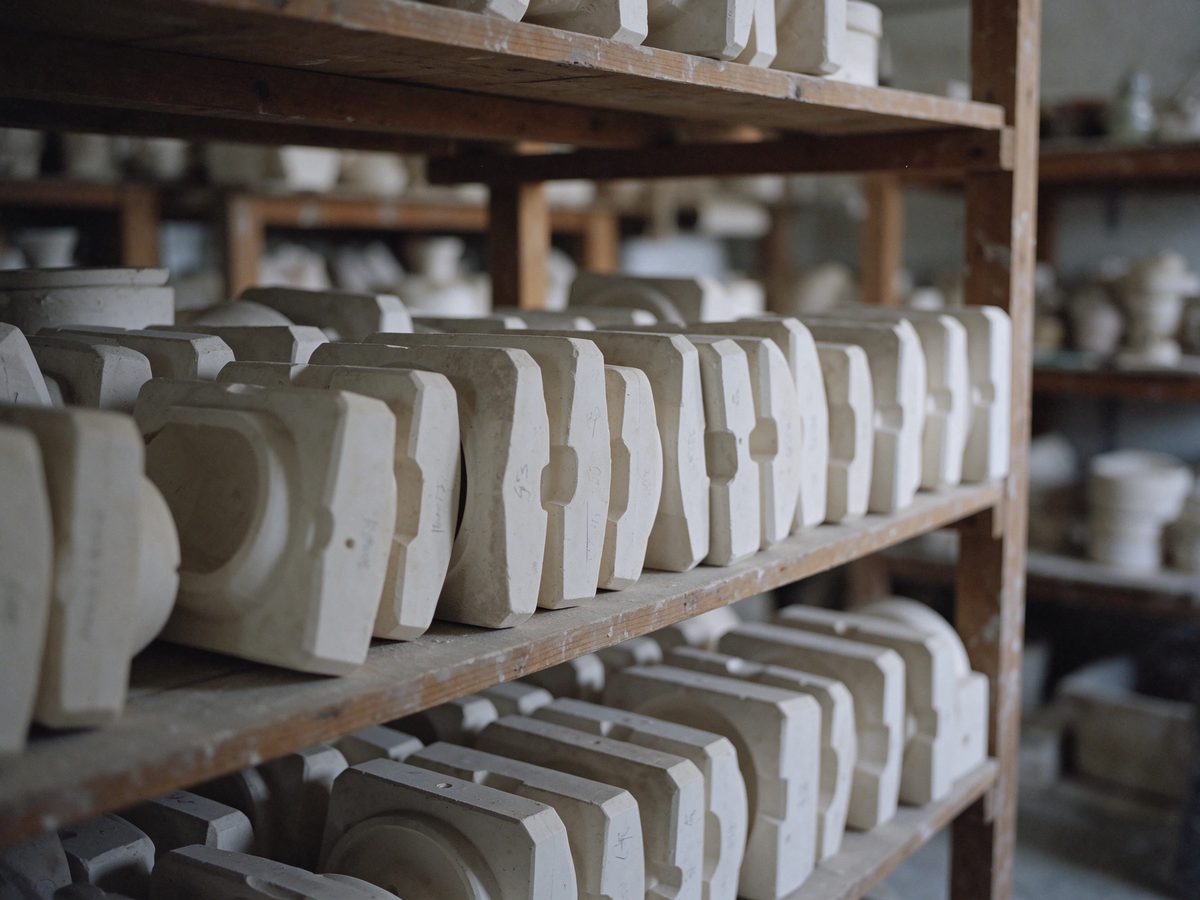
Working moulds
Working moulds
Slip casting
Slip casting
Trimming
Trimming
Glazing
Glazing
Kiln
Kiln

The seven production steps, in the order they actually happen — Part 1.

What is inside

Open any part to see what it covers.

Part 1 — FoundationsWhat Dehua actually is, and what the white body can and cannot do.
  • Ivory white, high white and ordinary white; glossy, matte and satin — and why a matte workshop is not automatically a glossy workshop.
  • The seven steps from file to fired piece, so you can see where the money and the days go.
  • Natural tolerance: 10–15% firing shrinkage, batch-to-batch colour shift, pinholes. Normal variation, not defects.
  • Stock item, modification or a brand-new mould — and which workshop type each one needs.
Part 2 — Supplier evaluationTelling a prototype studio from a volume factory, before you send money.
  • Three workshop types in Dehua, the order each one is right for, and the honest limit of each.
  • An eight-field desk check: main category, in-house equipment, MOQ, mould fee and ownership, lead time, secondary processes, QC standard, invoicing and export paperwork.
  • Sample evaluation, and the order in which to walk a workshop on video: printing room, mould room, casting, trimming, glaze, kiln, QC.
  • Supplier grading and a working pool of two to three alternatives.
Part 3 — Design and cultural complianceThe check that has to happen before the mould is cut.
  • Region-by-region red lines for the EU, North America, the Middle East and South-East Asia — symbols, religious text, silhouettes and imagery.
  • Why text is the highest-risk element, and why machine translation is not a check.
  • Silhouette risk: a shape can be read as a symbol before anyone looks at the drawing.
  • Copyright and cultural-appropriation exposure, plus a self-check list you can run in ten minutes.
Part 4 — Fulfilment and quality controlSeven points to put in writing, four checkpoints, one grading language.
  • What goes into the order confirmation: forming method, glaze standard, dimensional tolerance, engraving spec, packing, milestone dates, defect rules.
  • Four checkpoints: moulds ready, first article, bisque, glaze-fired batch.
  • Defect grading A / B / C and the sampling rules that go with it.
  • Dehua-specific risks: shared kilns, glaze batch shift, mould wear, silent subcontracting.
Part 5 — Counterparty due diligenceDirect producer, single-process shop, broker, or licensed factory.
  • How to tell a trading middleman from the workshop that actually makes the piece.
  • Capacity verification: in-house versus subcontracted processes, and who carries the quality.
  • Contract and order-document points that hold up in a dispute.
  • Money flow: deposit size, balance only after inspection, and the receiving account you must not use.
Part 6 — Disputes and evidenceWhat to keep from day one, and how to escalate without shouting.
  • The evidence file to build per order, starting at the first message.
  • Three escalation levels: interpretation gap, breach, bad faith.
  • Six recurring disputes — colour, grading, delay, mould ownership, subcontracting, transit damage — with the clause each one turns on.
  • Which claims are realistically recoverable, and which are not.
Part 7 — Close-out and long-term suppliersClosing an order properly is what makes the second order cheaper.
  • Close-out actions: settlement wording, archive, samples, moulds, after-sales window.
  • A supplier file that updates after every order.
  • A 40 / 25 / 20 / 15 performance scorecard, so the ranking is arithmetic instead of mood.
  • Elimination triggers and the replacement pool.
Final chapter and appendixA six-block action checklist, plus the sixteen forms themselves.
  • Six blocks: preparation, sourcing, sampling, contract and production, inspection and shipping, long-term maintenance.
  • Sixteen forms, ready to print or fill in and send to a workshop.
  • Every form is cross-referenced to the part of the book that explains it.

One page, in full — no email needed

Part 2.5 is reproduced exactly as it appears in the book. The second free page, Part 4.3 on defect grading, is one click below.

Part 2.5

Reading a quotation

A usable quotation itemises. A bundled number does not.

A quotation you can compare, line by line, separates:

  • One-time tooling — modelling, master model printing, plaster working moulds.
  • Per piece — body, glaze, firing.
  • Surface work — laser engraving, decal, gilding, sanding.
  • Freight and packing — sample freight, bulk packing, tax or export paperwork.

Most workshops here quote one bundled figure. The minimum you should insist on is one-time tooling separated from per-piece cost.

Four extras that reappear on almost every quotation:

  1. Body only. Glaze and firing invoiced separately.
  2. Plaster mould wear. Each working mould has a finite cycle count; re-moulding is a new charge — cheaper than a new master model, but not free.
  3. Revisions. Free rounds are usually limited. The limit and the price of an extra round belong in the quote, not in a later message.
  4. Packing upgrades. Inner tray, printed box, label — priced per unit, and easy to forget.

Put three things in writing: how long the price holds, which processes are inside it, which are extra. A number without that sentence is not a quotation.

Sourcing Handbook · p.15

Open the second free page — Part 4.3, grading a finished batch

A — accept. Rests flat without wobble. Glaze clean at arm's length. Engraved lines continuous, no chipped edges. No crack, visible or hairline. Dimensions inside the agreed tolerance.

B — negotiate. Light colour variation, scattered pinholes or glaze bubbles, a slight wobble without toppling, a small loss of engraved detail. B grade is not automatically free: discount, rework, or replacement of the same quantity in A grade. Choose which one in the order, not after delivery.

C — reject. Visible or hairline cracks, warp, unstable centre of gravity, large bare patches, chipped corners, or a pattern materially different from the approved sample.

Sampling. Under 50 pieces — inspect all. 50 to 200 — 20%, minimum 10 pieces. Over 200 — 10%, minimum 40 pieces. If the defect rate exceeds the agreed limit, widen the sample or inspect everything before paying the balance.

Sixteen forms, already written

Print them, or fill them in and send them to a workshop as a PDF. Three prevent most of the disputes in this business: sample confirmation, mould ownership, inspection checklist.

RFQ sheetSample confirmationMould ownership agreementBulk order checklistProject briefSupplier profile cardSupplier comparison scorecardMould registerProduction trackerInspection checklistPayment logDispute logSupplier performance reviewCompliance test trackerPackaging confirmationDispute scripts

What one wrong assumption costs. A master model re-opened after you approved the sample — tooling paid twice. A batch that fails the bar you agreed — rework, replacement or a discount, plus the shipping window. A mould you paid for and cannot take with you — the next order starts from zero.

No cost ranges are printed here. Those numbers belong in your factory's quotation.

How it sits next to the service tiers

The handbook teaches the rules. The tiers apply them to your project.

Already bought the handbook? Within 30 days your price is Basic $55, Standard $117, Premium $180 — the higher the tier, the more of the book comes back. On Premium the book ends up free. One use, first service order only, not transferable. Quote your order ID from your purchase confirmation.

Written in Dehua, not about Dehua

Every rule here came out of a workshop on this street. The author lives and works in Dehua, sourcing and developing white porcelain for overseas small buyers — 3D modelling, mould making, prototypes, small-batch trials and bulk orders — including the parts nobody writes down: which plaster mould is yours after you pay for it, and what a shared kiln does to your delivery date.

Before you pay

What exactly do I receive?

A PDF handbook in English, laid out for A4, plus the sixteen forms as separate files so you can print them or fill them in and send them to a workshop. Sent by download link after payment; updates free for the first twelve months.

Does it include factory contacts or a supplier list?

No. This is the rulebook, not a vendor list. Matched workshops are what the service tiers deliver — which is also why the handbook can be sold to anyone without giving away your suppliers.

Can I get a refund?

No. Once the download link is sent, the sale is final and no refund or exchange is accepted. This is why the two sample chapters are published in full on this page: read them before paying. If the file will not open or the download fails, we repair or replace the file within one working day — that is a delivery problem, not a refund.

How is this different from hiring you?

The handbook teaches the rules. The service tiers apply them to your project: we shortlist, check the numbers, visit the workshop and put our name on the recommendation.

The rules, in one file

56 pages, 16 forms, two free chapters above. One payment, no subscription.

$39.99

Request the launch link

Digital download. All sales are final — read the two free chapters before buying. By paying you confirm immediate access to the file.

$39.9956 pages · 16 forms
Request the launch link